
Journal
サン・クロレラの取り組みや
サポートするアスリートたちのTOPICS。(PR)
Find out about Sun Chlorella's corporate activities and sponsored athletes
Ran Takahashi
Volleyball player

Since earning his first call-up to the Japan national team at just 18, Ran Takahashi has taken on Italy’s professional league as a university student and played a central role for Japan at both the Tokyo and Paris Olympics. Now 24, he has spent this season pushing his body to new limits—seeking a higher level of performance while competing through the grueling, seven-month SV.League campaign.
In pursuit of what he describes as a greater “sense of hang time,” Takahashi has committed to strict nutritional control, intensive training, and listening closely to his body. The result: a physique that matches his ideal. “My performance has definitely improved,” he says with confidence.
In this second part of our interview, Takahashi looks back on a season in which he led Suntory Sunbirds Osaka as captain—highlighted by a remarkable 29-match winning streak. He also reflects on his role within the team and shares his thoughts on the upcoming Asian Championship, where Olympic qualification is on the line for Japan.
What He Learned—And What Young Athletes Can Do Today
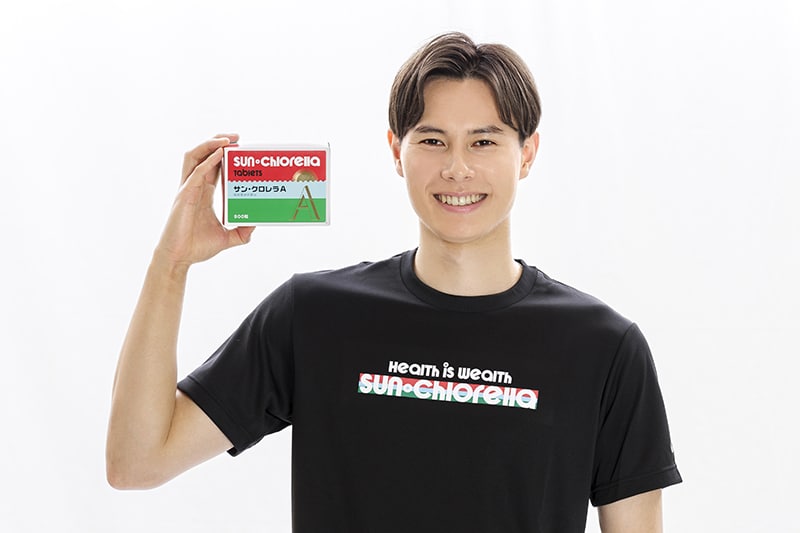
Takahashi’s relationship with Sun Chlorella dates back five years, to his university days. At the time, he admits, he didn’t yet have the same level of awareness about his body and conditioning.
“Now I pay close attention to my diet and overall condition, but back then I was living in a dorm, and when I played overseas, the foods available to me were limited. By incorporating Sun Chlorella Powder and tablets, I was able to supplement the nutrients I was missing. It made a significant difference for me.
For athletes, daily meals are part of training—that’s something we all understand. But being able to get what you need quickly and easily makes a big difference. I usually mix Sun Chlorella Powder into yogurt, but you can also add it to drinks or try different variations. I think there’s still a lot to discover.”
As a student, the priority is often simple: eat enough, spend as little as possible, and enjoy what you like. Takahashi laughs, admitting he was no different.
“In high school and when I first entered university, I didn’t think too much about it. Even on game days, I’d eat convenience store meals, rice balls, fried foods—whatever was available. But now that I truly understand the importance of nutrition, I wish I had been more conscious of it earlier.”
“For many student athletes, training itself isn’t always fully developed yet, so one approach is to simply eat more and build a bigger body first. But that doesn’t mean you can just eat anything. Even small changes can improve the quality of your muscles.
Looking back, I think things could have been different if I had started earlier. And even now, many students probably don’t cook for themselves or get enough vegetables. Just adding something like Sun Chlorella can make a difference.
If you think, ‘I have to do this, I have to do that,’ it becomes stressful. So I think it’s best to start with what you can.”
Passing on his own experiences to the next generation is also part of his role as a professional. But above all, for Ran Takahashi, results on the court remain the most important measure.
As the SV.League season reaches its climax, the championship—where back-to-back titles are on the line—is just around the corner.
A New Role as Captain—and a Remarkable 29-Match Winning Streak
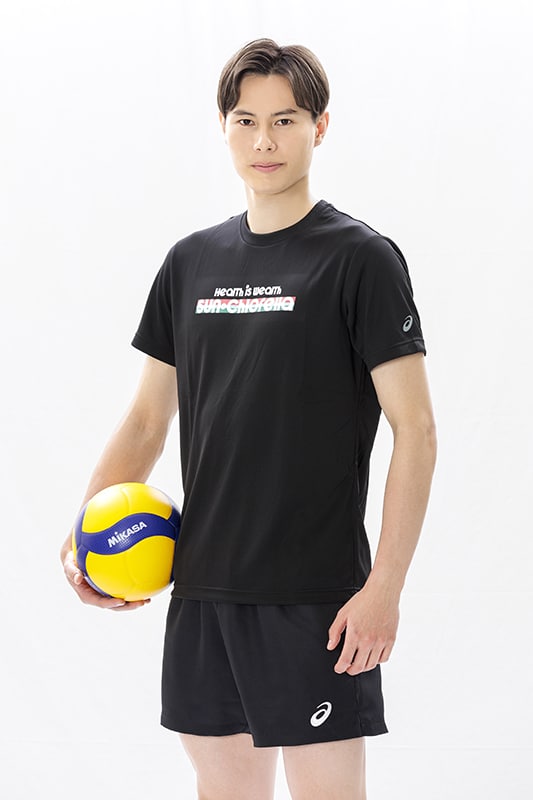
This season, Takahashi was named captain of Suntory Sunbirds Osaka. While he has held leadership roles before, captaining a top-tier team made up of players with different backgrounds, ages, and nationalities brings a different level of responsibility and pressure.
And this is no ordinary team—it is a perennial contender, a championship-winning side.
Yet when asked about the challenge, Takahashi smiles.
“I’m not really doing anything special. Sometimes I even think, ‘Wait, I’m the captain?’ (laughs).”
The Sunbirds roster features a wealth of international experience, including former Russian national team star Dmitriy Muserskiy, Japan internationals Taishi Onodera, Masahiro Sekita, and Tomohiro Ogawa.
Among such seasoned players, the 24-year-old Takahashi was named captain. Rather than trying to lead from the front in a traditional sense, he sees his role differently.
“Many of the players who have been with the Sunbirds for a long time already have the mindset needed to win championships. On top of that, we added highly skilled players, and the team came together very quickly this season.
We’ve had some setbacks—we lost the opening match to Osaka Bluteon, were knocked out in the Emperor’s Cup quarterfinals, and had back-to-back losses in the league as well. Those experiences reminded us that we’re not a finished team yet.
But because of that, I feel like we’ve grown closer as a group in a positive way. My role is to connect—bridging players and staff, sharing players’ perspectives with the staff, and communicating the staff’s expectations to the players. I’m much more conscious of communication than ever before.”
He may downplay his leadership, but when the team needs a spark, he steps forward.
“When it’s time to lead, I’ll lead. Sometimes just saying a word can sharpen the team. Other times, you show it through your play.
It may sound like nothing special, but I want to lead by example—showing responsibility through my actions.”
The team did suffer some losses, but their dominance was undeniable, including a remarkable 29-match winning streak in the regular season. Behind that success, the presence of captain Ran Takahashi played no small part.
Confidence Gained Through Transformation—“I Can Still Grow”
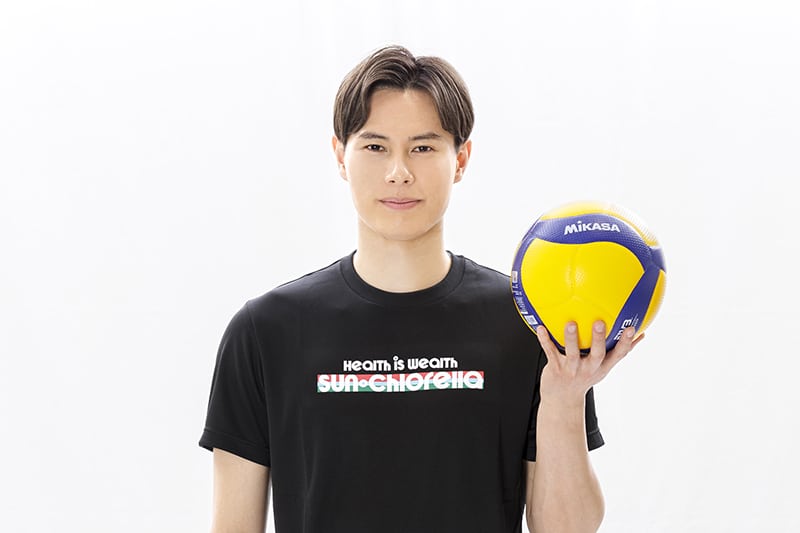
As one of the defining players of the SV.League and a central figure for the Japan national team, Takahashi believes his role goes beyond simply delivering results—he also sees it as his mission to showcase the appeal of volleyball.
“I’m supported by so many people, and I’m truly grateful for that. To repay that support, it’s important to keep delivering results and always aim for the top.
As long as I’m a volleyball player representing Japan, I want to keep striving for an Olympic medal. I also want to be someone who can inspire younger generations.
By carving out my own path, I believe it can help shape the future of volleyball—and encourage more kids to want to play the sport. I want people to feel that volleyball is something you can dream about.
And ultimately, I want to become a truly one-of-a-kind presence in this sport.”
This season—marked by physical transformation and consistently high-level performance—has been a period of real change for Takahashi. At the same time, he feels strongly that he is still evolving.
“I want to keep improving, and at the same time, I want to deliver results along the way. First, I want to win back-to-back titles in the SV.League.
Beyond that, we have the Asian Championship with Olympic qualification on the line. I want to secure that spot this year and continue raising my level step by step.”
He continues to prove, through his play, that volleyball is a sport worth dreaming about.
For Ran Takahashi, the journey is far from over. His evolution continues.